


The Eldorado or a sunken ship--we humans have always dreamed of discovering a treasure. But dreams rarely come true as hoped. Today, with the help of solar cells, we can generate energy out of almost nothing. So why are we still flushing tons of potential down the toilet? Is it maybe more than just "poop"?
 Streaming Video

Mushrooms have hardly been researched. They are among the oldest and most diverse life forms on our planet. Plants were only able to develop through fungi in primeval times. They are at home everywhere: in the earth, in the air, in our bodies. And they form huge networks. They are intelligent even though they don't have a brain of their own, they make decisions and trade in the plants they live with. They possess insect bodies and turn them into zombies. Are mushrooms the secret rulers of the planet?
Streaming Video
It's an eternal childhood dream: time travel. How fantastic it would be to be able to jump back and forth into the past and future as you please? Just science fiction? Not quite. Scientists from the fields of quantum physics, string theory and astrophysics are making it clear that time travel is theoretically possible--at least when it comes to the future. How might we succeed in building a time travel machine? And what is time anyway?
Streaming Video

We dream for up to six years of our lives. What if dreams were more than fantasy? If we could take the brilliant ideas we had in our dreams into reality? There is creative potential in our dreams that is mostly left untapped. Should we dream more--and make the most of our dreams?
Streaming Video

How beautiful life would be without fear? We could cross rocky gorges on a tightrope carefree or dare to perform breakneck actions. But unfortunately, we are afraid of many things--even those that are not dangerous at all. Why does fear have such a hold on us? And wouldn't it be much better if there were no fear at all?
Streaming Video
Long before the phrase "energy crisis," the energy flows on Earth were clearly distributed and well-dosed--until we humans got fire under control about 500 thousand years ago and began to actively use the energy flows of the Earth for ourselves. We are now using so much energy that our planet is reaching its limits. Wouldn't it be clever to find an energy that protects the Earth and the climate and is inexhaustible at the same time? But where do we find it, this perfect energy?
Streaming Video
Without a doubt, hatred has a destructive power. Hatred is purposeful and destructive. But does hate actually have a purpose? Why do people hate anyway? What is this emotion for, what is it good for? And are all humans endowed with the capacity to feel hate? Many questions, and science has by no means answered all of them.
Streaming Video
Finding a remedy against aging is a dream of humankind. But the dream could turn into reality: Laboratories around the world are reporting successful rejuvenation in animals such as mice, nematodes, and fruit flies. Aging research has long since achieved amazing things: animals live longer and age healthier. But can this be transferred to us humans?
Streaming Video

Artificial intelligence can recognize us, drive cars, operate surgeries with precision, create art, and play perfect chess. Robots can do so many things--but what about artificial feelings? Will robots one day be our friends or partners? Can we love robots like a real human? And above all: Can they love us back?
Streaming Video

While John Bowlby focused on the consequences of a lack of attachment, Mary Ainsworth took a step back and looked at the nature of attachment and famously documented different types. In this film we look at her classic strange situation with film of the experiments and expert comment from three psychologists.
Streaming Video
This film uses some famous psychological studies to explain the experimental method and illustrate how laboratory experiments are done, their strengths and limitations and, often forgotten, how these limitations do not apply uniformly to all experimental studies.
Streaming Video
Psychologists have long been aware that attachment security may be transmitted from one generation to the next. But how does this happen? A new idea here is the importance of mind-mindedness, a carer's ability to tune into what their child may be thinking or feeling. This film looks at Professor Elizabeth Meins' influential experimental research showing that mind-mindedness is a clear predictor of attachment security.
Streaming Video

In 2021, evidence of unmarked graves was discovered on the grounds of a residential school run by the Catholic Church in Canada. After years of silence, the forced separation, assimilation and abuse many children experienced at these segregated boarding schools was brought to light, sparking a national outcry against a system designed to destroy Indigenous communities. Set amidst a groundbreaking investigation, Sugarcane illuminates the beauty of a community breaking cycles of intergenerational trauma and finding the strength to persevere.
Streaming Video

Fundamental freedoms examines the history of Canada's Charter of Rights and Freedoms, the struggle surrounding the ratification of the document, and the importance of the Charter in today's multicultural society. It reviews the evolution of the Charter of Rights and its guarantees: the fundamental freedoms, democratic rights, mobility rights, legal rights, equality rights, language rights. The film interviews government officials, educators, the legal community, and recent immigrants, and includes historical footage featuring former Canadian Prime Ministers Pierre E. Trudeau and Jean Chretien, and astronaut Marc Garneau.
Streaming Video
No place to go provides a brief history of refugee movements, outlines the grounds upon which the 1951 Refugee Convention is applied, and describes the obstacles that governments construct to manipulate the movement of would-be refugees. This video describes the affect the legal agreement has upon people's lives, intercut with footage from around the world along with graphics and animated sequences. The personal story of an Afghan refugee's flight to Toronto and successful refugee application is woven through the program.
Streaming Video
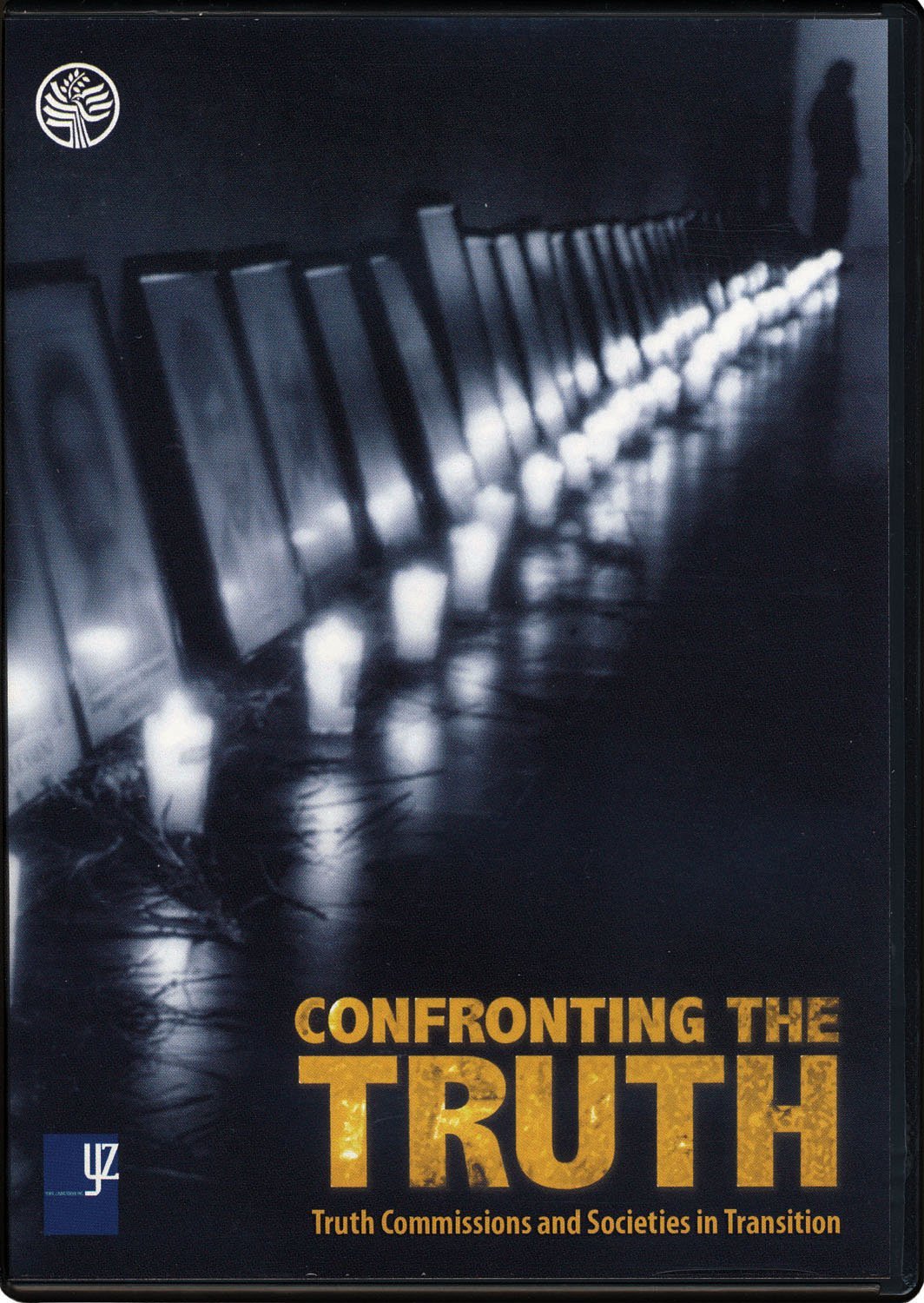
Confronting the Truth shows how countries which have experienced massive human rights violations have created official, independent bodies known as truth commissions. Since 1983, truth commissions have been established in over 20 countries, in all parts of the world. Confronting the truth documents the work of truth commissions in South Africa, Peru, East Timor, and Morocco. Taking testimony from victims and perpetrators, and conducting detailed investigations, truth commissions create a historical record of abuses that have often remained secret. They identify patterns of abuse, and the structural and institutional weaknesses, societal and cultural problems, and weak legal systems that made the violations possible. To remedy these faults, they recommend governmental, societal and legal reforms to address the pain of the past, to safeguard human rights and due process, and to ensure that the horror will not be repeated.
Streaming Video